Mermaids of a Restless Sea
Nádia Duvall
[06/11/25 - 20/12/25]

Exhibition View

Bladed weapon, 2025
Worbla, fish scales, copper, light system
10x130x30 cm

Detail of Woman with big mouth resurfacing from the depths of the ocean, 2025
Acrylic glass, wood, ink skin, worbla, cold porcelain, handmade crystals, acrylic, fish scales, resin teeth, epoxy resin, metal, varnish, 3D pen drawing, led lighting.
112x92x30 cm

Detail of Woman with big mouth resurfacing from the depths of the ocean, 2025
Acrylic glass, wood, ink skin, worbla, cold porcelain, handmade crystals, acrylic, fish scales, resin teeth, epoxy resin, metal, varnish, 3D pen drawing, led lighting.
112x92x30 cm

Mouths of war, 2025
Acrylic glass, wood, ink skin, worbla, cold porcelain, handmade crystals, acrylic, fish scales, resin teeth, epoxy resin, metal, varnish, lenticular photography, light system
112x92x30 cm

Detail of Mouths of war, 2025
Acrylic glass, wood, ink skin, worbla, cold porcelain, handmade crystals, acrylic, fish scales, resin teeth, epoxy resin, metal, varnish, lenticular photography, light system
112x92x30 cm

Writings from the past, present and future, 2025
Video and sound
3m00s – Ed of 3

Exhibition View

The lightness of freedom, 2025
Iron anchor, fiber, resin, handmade crystals
103x58x58 cm

Detail of The lightness of freedom, 2025
Iron anchor, fiber, resin, handmade crystals
103x58x58 cm

A Bone between the Skin I, II, III, IV, 2025
Cuttlefish bone, handmade crystals, ink skin, acrylic glass, silicone, resin, metal frame
63x 53 cm
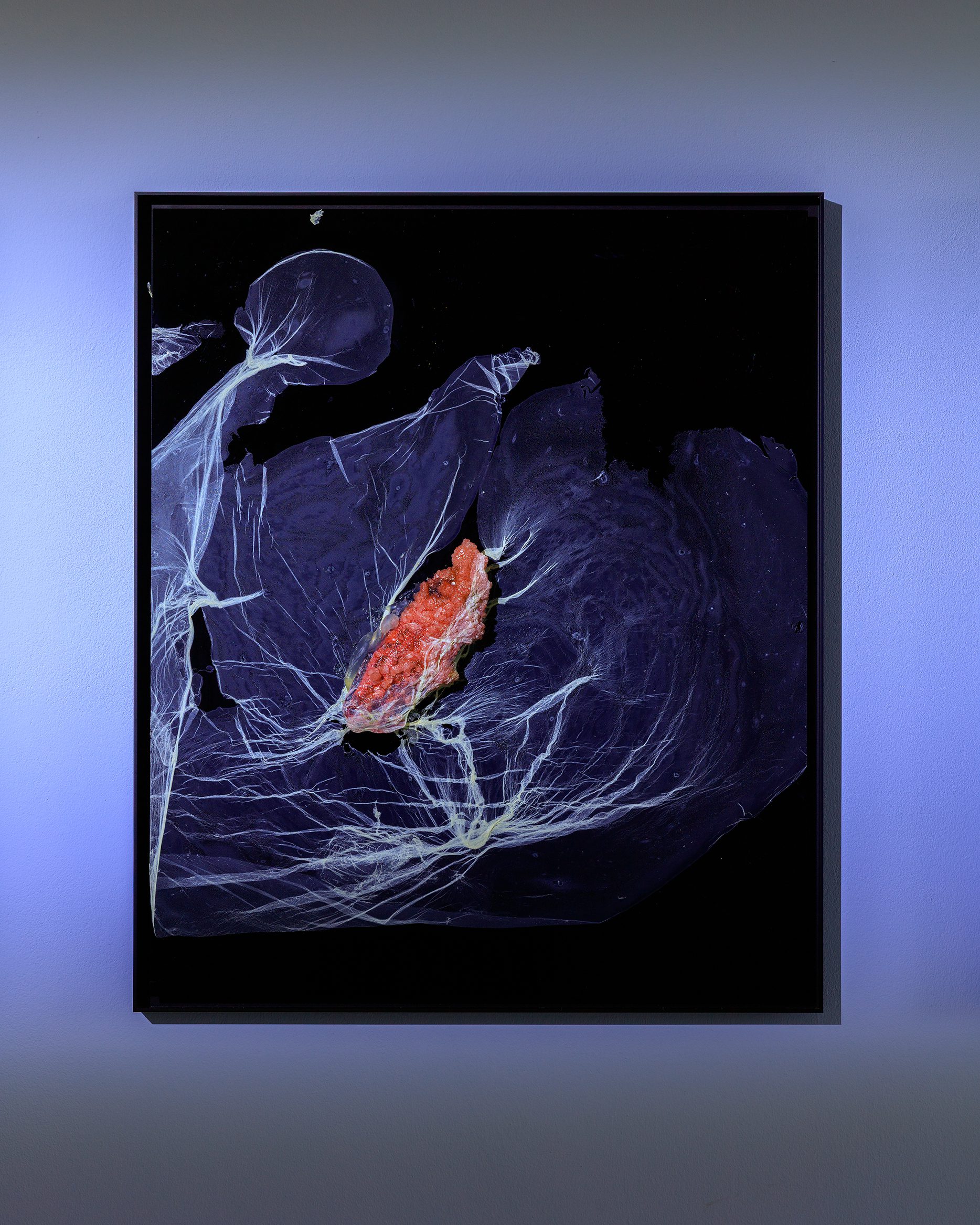
A Bone between the Skin III, 2025
Cuttlefish bone, handmade crystals, ink skin, acrylic glass, silicone, resin, metal frame
63x 53 cm
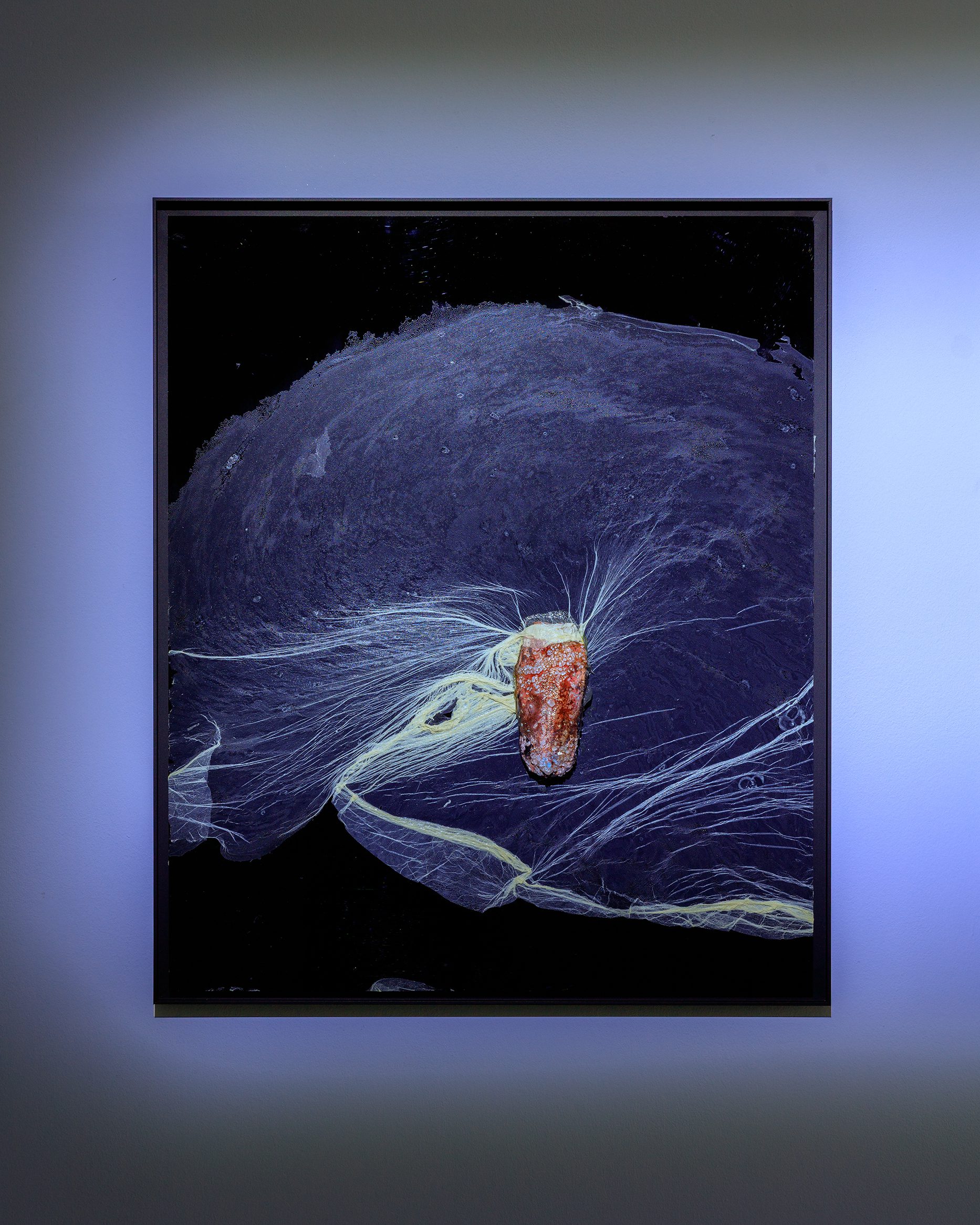
A Bone between the Skin I, 2025
Cuttlefish bone, handmade crystals, ink skin, acrylic glass, silicone, resin, metal frame
63x 53 cm
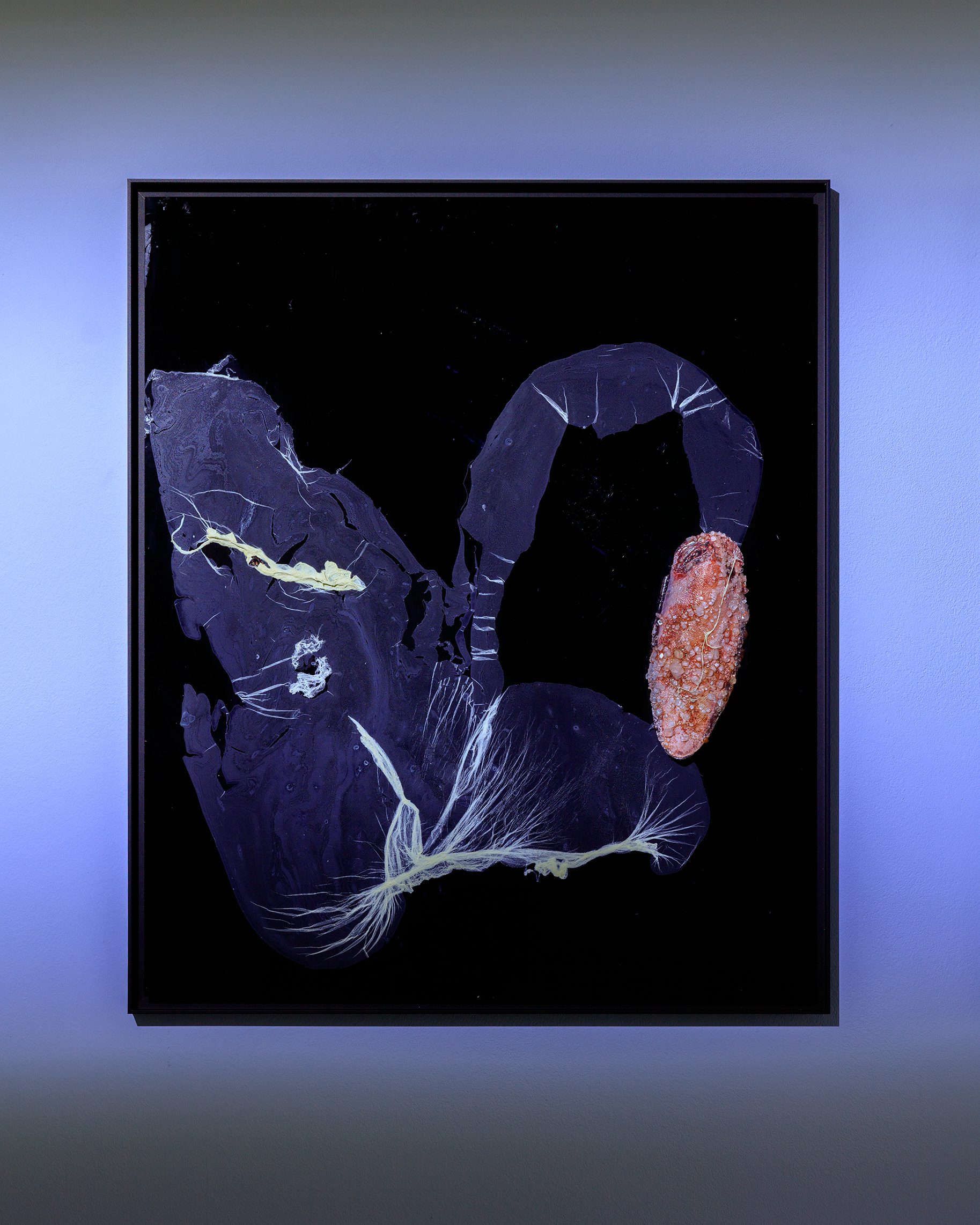
A Bone between the Skin III, 2025
Cuttlefish bone, handmade crystals, ink skin, acrylic glass, silicone, resin, metal frame
63x 53 cm

Detail of A Bone between the Skin IV, 2025
Cuttlefish bone, handmade crystals, ink skin, acrylic glass, silicone, resin, metal frame
63x 53 cm

The six Mute (Mudas), 2025 (serie of 6)
Ink skin, worbla, acrylic glass, acrylic mirror, handmade crystales, ligth system, resin, wood
61x50x32 cm
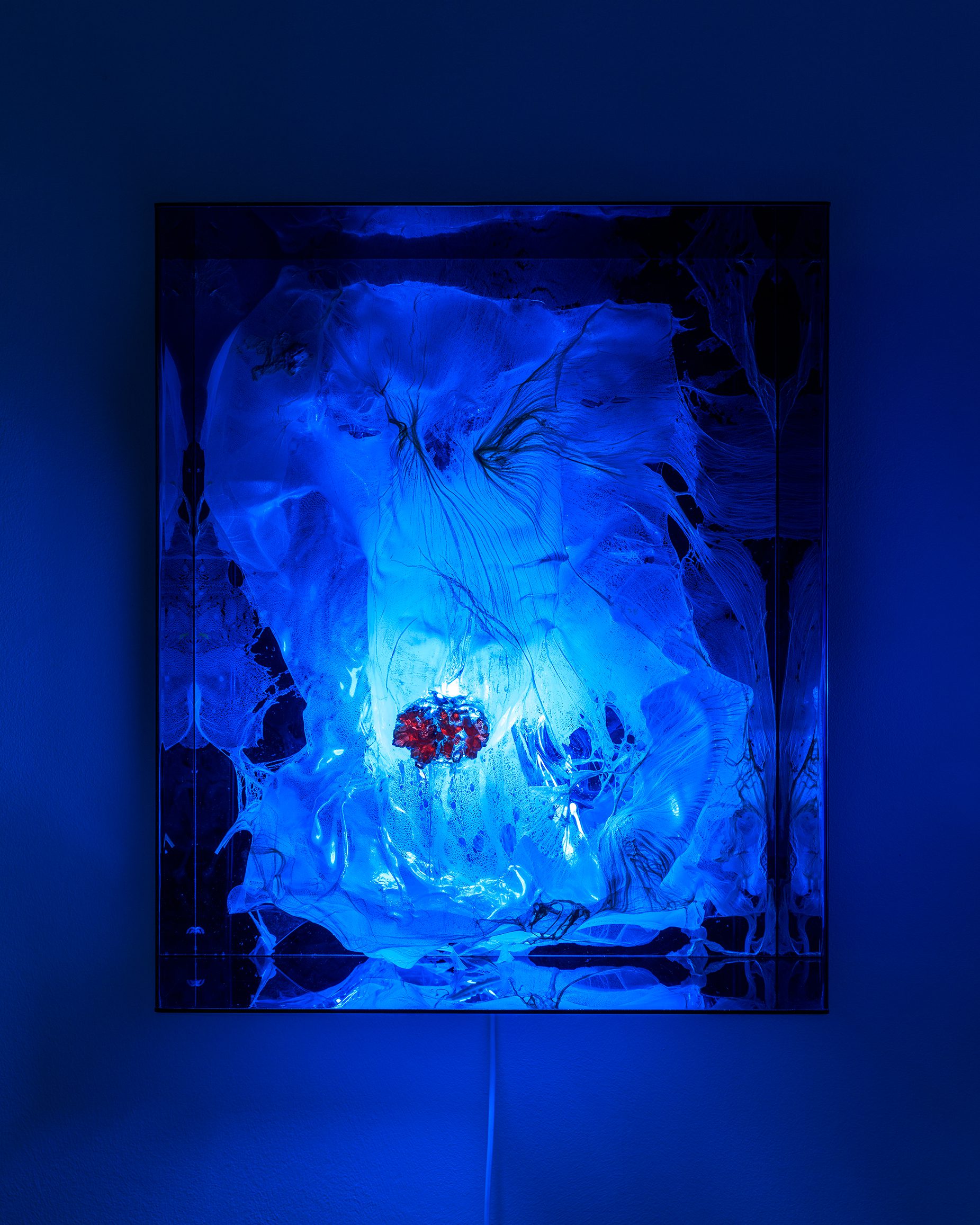
Detail of The six Mute (Mudas), 2025 (serie of 6)
Ink skin, worbla, acrylic glass, acrylic mirror, handmade crystales, ligth system, resin, wood
61x50x32 cm

Exhibition View

Exhibition View

Cthulhu Cave, 2025
Marble, clay, acrylic, cold porcelain, resin, wood, charcol, moss, pig skin, handmade crystals, plastic, synthetic fur, light system
25x37x25 cm

The Blue Hour, 2025
Video and sound
13m05s – Ed of 3

The Blue Hour, 2025
Video and sound
13m05s – Ed of 3
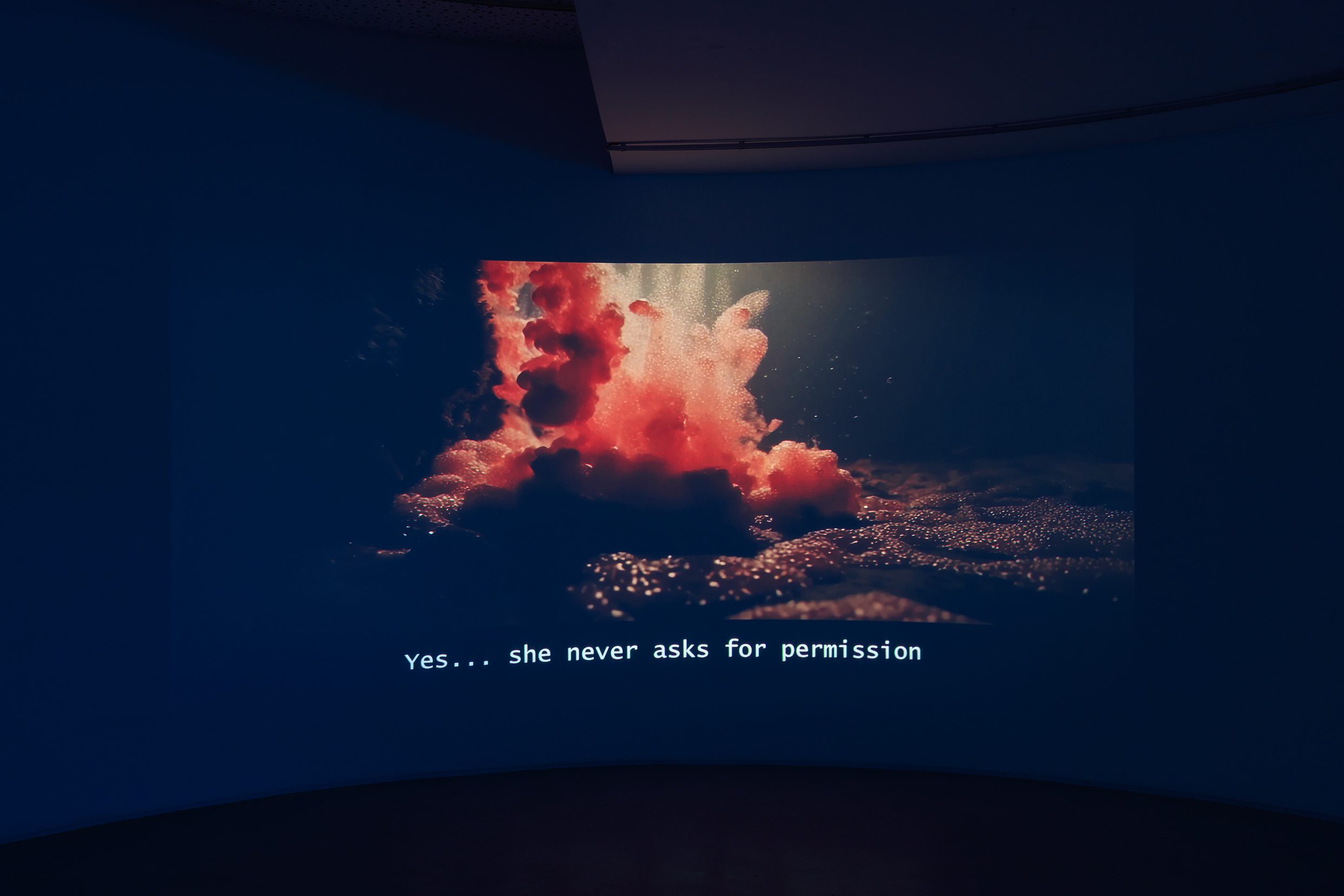
The Blue Hour, 2025
Video and sound
13m05s – Ed of 3
The Shadowy Future of Memory
In a metaphorical and animalistic hybridity, Nádia Duvall explores the depth and density of the time preceding war: The Blue Hour. This immersion, however, darkens all colour until it disappears into pitch black. This extreme sinking warns us of the danger in which women find themselves in the present, updating the unequivocal affirmation of a present future that rejects arrogance, abuse of power, the logic of fear and the lies sold as post-truths. Let us hope that myths rebuild us, preparing us for confrontation, always referring to the ineffable that nourishes our spirit. The narrative leads us to the most fundamental mystery of existence, of coexistence, and recognition of dialogue as the only way to “other” something out of ourselves.
In an exhibition where every work explores the cinematic – even when it is a sculpture – thinking machines (Artificial Intelligence), which simulate the flaws we only saw when filming on celluloid, seek to discover the taste we feel in our mouths when we surrender to rage or when love kisses us. Films, and art in general, are the lies that bring us closer to truths that are ever more real. The Portuguese saying “With the truth you deceive me” is inverted becoming with lies you reveal truths. The Mudas, for example, are like frames of a movement that allows a crystallized symbol of freedom to emerge from the mouth of silence.
Why do mermaids lose their tongues? Because singing is their weapon. Their music is such a seductive and convincing argument when combined with melody, rhythm, and word, it becomes stronger than any spell or will. Some men, who are afraid of that power, try to take mermaids tongues, language and singing away. The Mudas (Mute), despite this, do not lose their power; they simply cease to express it outwardly. Inside, they continue to sing, reaching ecstasies that go beyond narcissism, self-hypnosis, or synthetic happiness, offering themselves art, love and passion through the silence they hold within.
This exhibition is apocalyptic, which means it announces an end while also proposing revelation. The mermaid does not always have a fish tail – indeed, in the film The Blue Hour, it is a sort of human with a cuttlefish head. The invocation of Lovecraft’s Cthulhu, and above all the Cthulhucene proposed by Donna Haraway, implies rethinking the world for a multiplicity of species that must collaborate and create a hybrid entity that forces us to halt the extreme destruction humans have caused. More than a being composed of multiple beings, this Cthulhu-mermaid is a creature that feels fear even though it is extremely powerful. As Duvall presents it, it is a chimera of “oracles, witches, and mermaids” in a single entity that hovers in the water like a ghost driven directly by the will (Schopenhauer’s noumenon).
In every monster lies evidence of transformation, of becoming a powerful animal – conscious, yet only partially aware of the emotions that forced it to transcend the norm. It is a stormy sea beneath a black sky, swallowing migrants. These are the same waters that could have swallowed Nádia Duvall and instead turned her into a Cthulhu-mermaid, singing so the world never forgets what it does not want to become. Society must become more open – its mouth opened as wide as possible to bite the outside and let us peer into the inside, like an extremely dilated pore.
Matria asks us not to forget the vast influence of patriarchy, so that we may undo the perversions and imbalances it has created. For this reason, this Pessoa-like Disquieted Sea denounces the tension of the anticipated war that is no longer possible to avoid…
Manuel Furtado